
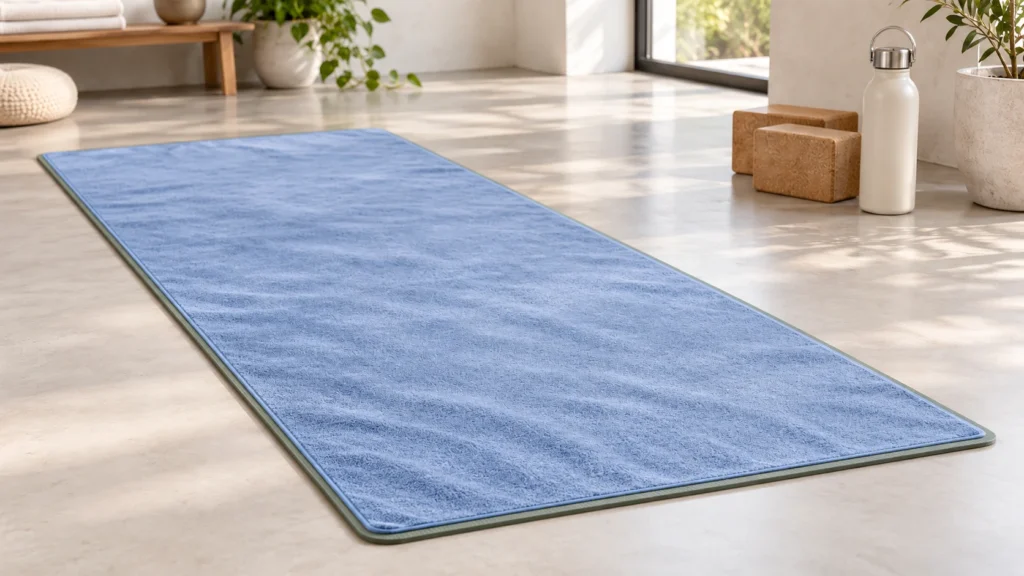
Understanding Yoga Towel Specifications
Private label yoga towels involve more than choosing a fabric and adding a logo. Fabric construction, GSM, silicone grip, and finished dimensions all influence product feel, weight, and cost.
For brands, yoga studios, and Pilates studios, selecting the right specifications starts with understanding how these factors work together. Before comparing supplier quotations, buyers should confirm that fabric weight, grip construction, and product dimensions are based on equivalent specifications.
Fabric Composition & Surface Construction
Fabric composition and surface construction are two different considerations when sourcing private label yoga towels.
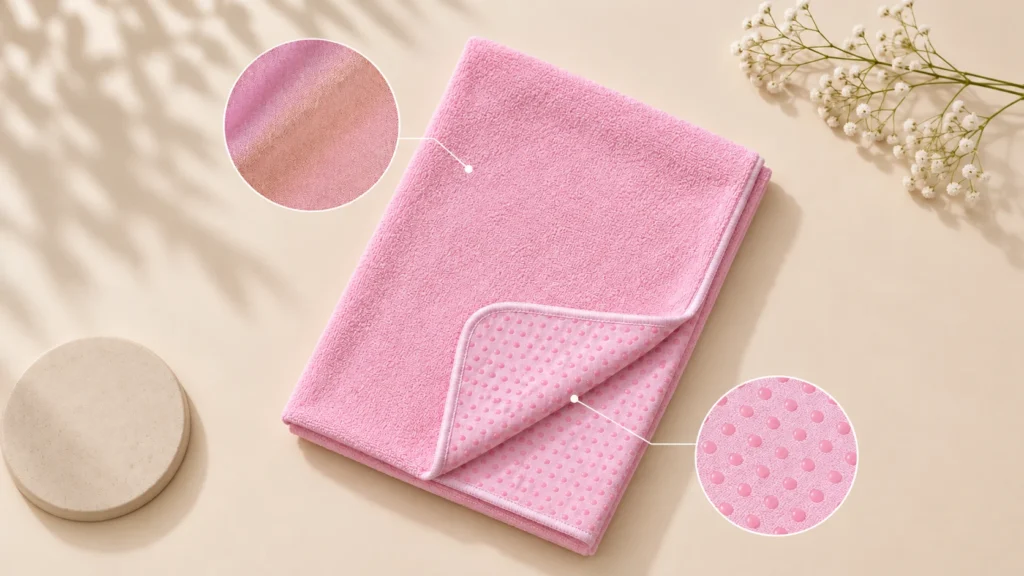
NUH Textile’s standard yoga towels use an 80% polyester and 20% polyamide microfiber blend with a textured surface commonly known as “ant fabric.” This construction offers a soft, substantial feel and good moisture absorption, while silicone grip dots are applied to the reverse side.
Other fabric options, including double-sided fleece, suede-like microfiber and waffle textures, can be developed for different product requirements. These constructions vary in surface feel, thickness and handling characteristics.
For accurate sourcing, buyers should specify both fiber composition and fabric construction. Providing a physical sample or fabric reference helps suppliers understand the intended texture and avoid differences between expectations and finished products.
Fabric GSM vs. Silicone Weight
Two yoga towels can look almost identical but differ significantly in weight and price. One important reason is that fabric GSM and silicone application weight are separate specifications.
Fabric GSM measures the weight of the textile per square meter. NUH Textile’s standard microfiber yoga towel uses 350 GSM fabric, with custom options generally ranging from 300 to 450 GSM. Lighter fabrics tend to feel thinner and reduce overall weight, while heavier constructions add thickness and material cost.
Based on our production experience, 350 GSM offers a practical balance of fabric feel, weight and cost. Increasing GSM beyond this level does not necessarily improve the product enough to justify the additional weight and expense for every project.
Silicone application weight refers to the silicone used for the grip dots on the reverse side. Our standard options are 150 GSM and 180 GSM, measured separately from the fabric. The 180 GSM option uses more silicone through larger dots or greater coverage density, increasing finished weight and cost. However, the difference in grip performance may be relatively small in practice.
Finished towel weight is measured in grams per piece rather than GSM. For reference, a 61 × 183 cm yoga towel using 350 GSM fabric and the 180 GSM silicone specification can weigh slightly over 600 grams. Actual weight varies with product dimensions and production tolerances.
When comparing quotations, buyers should request fabric GSM, silicone specifications and finished piece weight separately. This makes it easier to identify differences in construction rather than comparing price alone.
Yoga Towel Sizes & Mat Compatibility
A well-fitting yoga towel should provide appropriate coverage for the intended yoga mat. Choosing the right dimensions helps ensure the towel can be laid flat without excessive overhang or large uncovered areas.
NUH Textile’s two core sizes are 61 × 175 cm and 61 × 183 cm, designed around common yoga mat dimensions. Neither size is universally better. The appropriate choice depends on the dimensions of the mat used by the end customer.
Width deserves as much attention as length. A towel that is too narrow may leave parts of the mat exposed, while one that is too wide may extend beyond its edges. Buyers should therefore compare both dimensions rather than selecting a towel based on length alone.
Custom sizes, including 68 × 183 cm, are also available for specific projects. Before approving bulk production, buyers should confirm the required dimensions and evaluate a finished sample. The documented dimensional tolerance for our current yoga towel range is approximately ±2 cm.
For private label collections and studio projects, checking the towel’s fit with the intended mat helps avoid sizing differences between product expectations and the finished order.
Silicone Grip Design & Quality Checks
Silicone grip construction is an important consideration when sourcing yoga towels. Beyond fabric quality, buyers should evaluate how the grip pattern is designed, applied and checked during production.
Round silicone dots are commonly used because established production molds make them practical and cost-effective. NUH Textile’s standard construction uses approximately 3 mm dots with around 3 mm spacing. Dot size, density and color can be adjusted according to project requirements.
Alternative patterns, such as lines or geometric designs, are technically possible. However, changing the pattern generally requires new tooling, which can add substantial development costs. For most private label projects, an existing round-dot design is a practical starting point.
Grip quality also depends on silicone adhesion. During production, workshop checks may include manual scratching, tape-pull checks, rubbing and sample washing. Sticky silicone, lifting edges or visible bubbles can indicate potential adhesion problems.
If an issue is identified, affected materials should be isolated and the production process reviewed before work continues. These are in-process quality checks rather than certified third-party performance tests.
Before approving bulk production, buyers should examine the grip pattern, check the silicone application and evaluate samples under their intended conditions of use. A suitable grip specification should balance product performance, flexibility, weight and cost.
OEM & Private Label Considerations
Developing private label yoga towels involves more than selecting a fabric and adding a brand logo. Color consistency, branding methods, packaging and production quantities should all be considered before placing an order.
Color and branding are often among the first customization requests. Pantone-based colors can be developed to match a brand’s identity, while embroidery, digital printing, embossing and custom labels offer different branding options. The appropriate method depends on the fabric construction, design and intended appearance.
For yoga and Pilates studios, coordinated colors and visible branding may be more important than elaborate retail packaging. Consumer brands, on the other hand, may require additional packaging elements for retail presentation.
Packaging choices should reflect the intended sales channel. Individual transparent OPP bags are a common starting point, while paper sleeves, mesh bags and other customized formats may suit particular projects.
Order quantities also affect customization options. NUH Textile’s standard yoga towel MOQ starts at 1,000 pieces, with custom colors generally requiring 1,000 pieces per color. Special fabric development or packaging may involve additional minimum quantities or costs.
Before confirming production, buyers should approve the fabric, color, logo placement, grip construction and packaging. A complete reference sample helps establish clear expectations and reduces the risk of differences between the approved design and finished order.
Yoga Towel Buyer’s Checklist
Before requesting a final quotation or approving production, buyers should confirm the key specifications of their yoga towel project.
A clear purchasing checklist helps compare supplier quotations on the same basis and reduces misunderstandings during sampling and production.
Fabric: Confirm fiber composition, surface construction and the approved fabric sample.Weight: Specify fabric GSM and silicone application weight separately, and request the approximate finished weight per piece.Size: Confirm length, width and dimensional tolerances. Check the towel's fit with the intended yoga mat.Silicone Grip: Review dot size, pattern, coverage and color. Examine the actual sample for grip quality and adhesion.Branding: Approve the Pantone color, logo method, placement and dimensions before production.Packaging & Order Terms: Confirm packaging format, MOQ, sample lead time, production schedule and any additional development costs.
For private label brands, yoga studios and Pilates studios, consistent specifications are essential for maintaining product quality across repeat orders. Keep an approved reference sample and written specifications before confirming bulk production.
Explore NUH Textile’s custom yoga towel options to discuss fabric, sizing, silicone grip and private label requirements for your next project.