
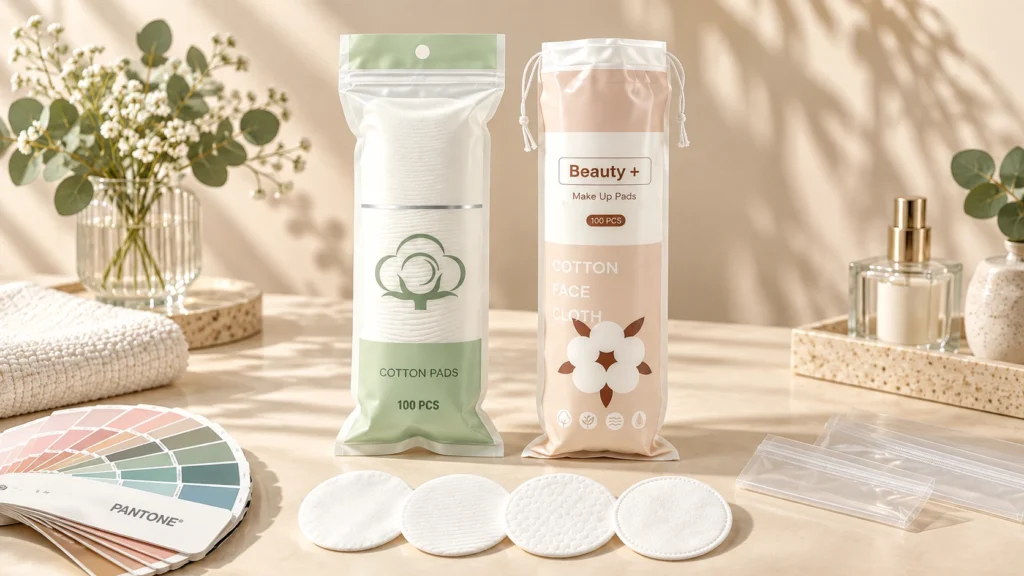
Cotton pad materials may look similar in finished products, but their fiber composition and construction can differ.
For beauty brands and private label buyers, selecting 100% cotton is only the starting point. The pad’s layer construction, GSM, surface texture and edge finish are equally important when defining a product specification.
This guide explains common cotton pad materials, the key differences in finished construction and what buyers should confirm before bulk production.
What Are Cotton Pads Made Of?
Cosmetic cotton pads are made from different fiber materials, including cotton, viscose and fiber blends. For multilayer pads, buyers should distinguish between the composition of individual layers and that of the finished product.
100% Cotton
Cotton is a natural cellulose fiber obtained from the cotton plant. For a finished pad to be described as 100% cotton, all its fiber layers must be made from cotton.
NUH Textile’s standard all-cotton three-layer construction uses cotton in both outer surface layers and the inner layer. This provides a defined material option for beauty brands developing cotton-based cosmetic products.
Viscose
Viscose is a regenerated cellulose fiber made from cellulose-based raw materials. It is also known as rayon in U.S. textile terminology.
Viscose is another material used in cosmetic pad production. For multilayer products, the fiber composition of the outer layers and inner layer should be confirmed separately.
Viscose–Polyester Blends
Viscose–polyester blends combine regenerated cellulose fibers with synthetic polyester fibers. When sourcing blended cotton pads, buyers should request the fiber percentages and confirm whether the declared composition applies to the entire pad or a specific material layer.
Does Spunlace Mean 100% Cotton?
Spunlace refers to a nonwoven bonding process, not a fiber type. Also known as hydroentanglement, this process uses high-pressure water jets to entangle fibers and form a nonwoven fabric. Cotton, viscose and other fibers can be used in spunlace materials.
Therefore, the term “spunlace” alone does not establish that a cotton pad is made from 100% cotton. Buyers should request the fiber composition separately from the manufacturing process and confirm the materials used in the finished pad.
Why Do Cotton Pads With the Same Material Feel Different?
Cotton pads with the same fiber composition can have different finished constructions and surface textures. Buyers should therefore define GSM, layer construction, surface texture and edge finishing as separate product specifications.
GSM and Layer Construction
GSM (grams per square meter) measures the mass of a material per unit area. It is not a direct measurement of the finished pad’s thickness or softness. For multilayer products, buyers should clarify whether the stated GSM refers to an individual material layer or the combined construction.
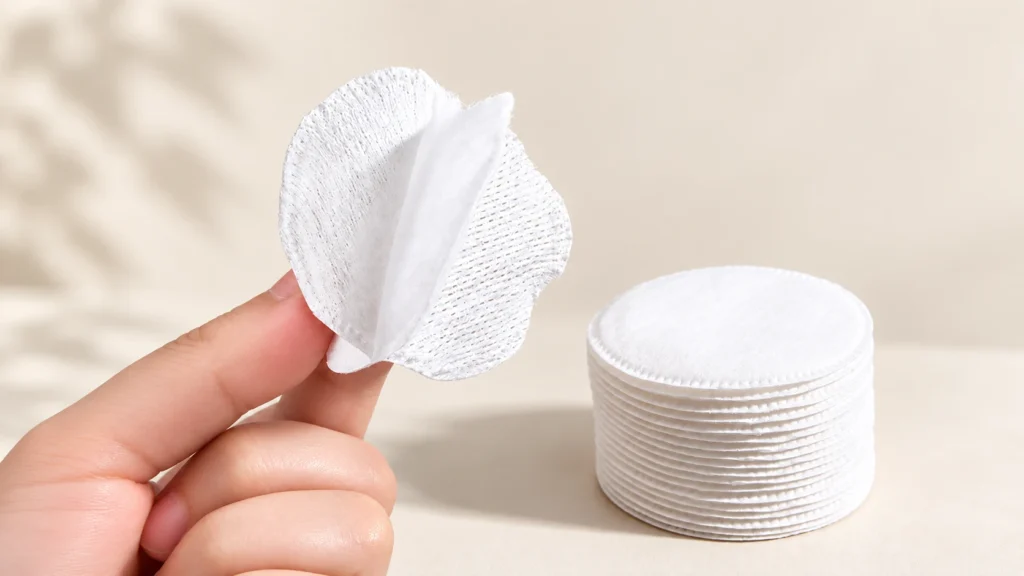
NUH Textile’s standard all-cotton pads use a three-layer construction, with two outer surface layers and an inner cotton layer. During product development, buyers should confirm the number of layers, the material used in each layer and the approved finished sample.
Surface Texture and Embossing
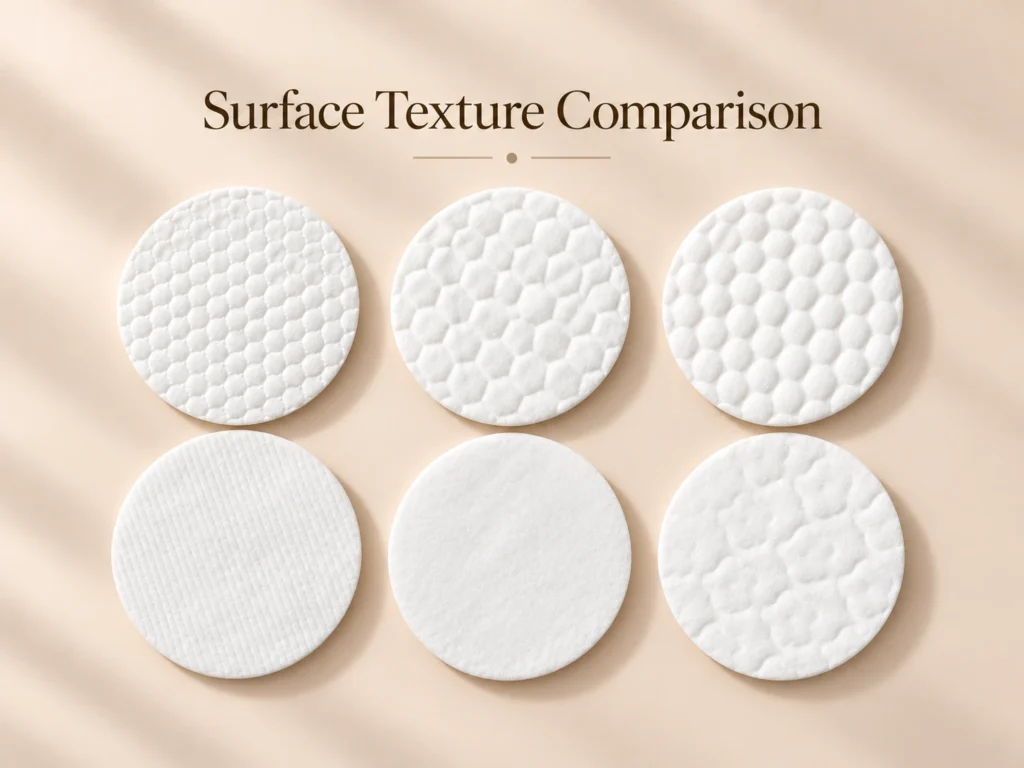
Cosmetic cotton pads can be developed with plain, striped and embossed surface designs. Surface texture is a separate specification from fiber composition and layer construction.
For customized projects, buyers should approve the intended pattern using a finished physical sample. If the front and back surfaces require different textures, both sides should be specified in the product requirements.
Edge Finishing and Layer Stability
Edge finishing is part of the finished product specification for multilayer cotton pads. NUH Textile’s standard three-layer cotton pads use heat-sealed edges to secure the layers around the perimeter.
During sample approval, buyers should check the finished edge, layer alignment and whether the pad remains intact under the intended conditions of use. These requirements should be recorded in the approved product specification.
Can a Burn Test Help Identify Cotton Pad Materials?
A burn test is a useful preliminary screening method when checking the fiber composition of cotton pads.
Cotton and viscose are both cellulose-based fibers. They typically burn with a paper-like odor and leave soft, crushable ash. Because their burning characteristics are similar, a burn test cannot reliably distinguish cotton from viscose.
Polyester behaves differently: it shrinks or melts under heat and can leave a hard bead. When a pad is supplied as 100% cotton, noticeable melting or hard fused residue is a reason to question the material declaration and request further verification.
For brands requiring confirmed fiber composition, laboratory testing provides the appropriate basis for material identification.
Cotton Pad Sourcing Checklist: What Should Buyers Confirm?
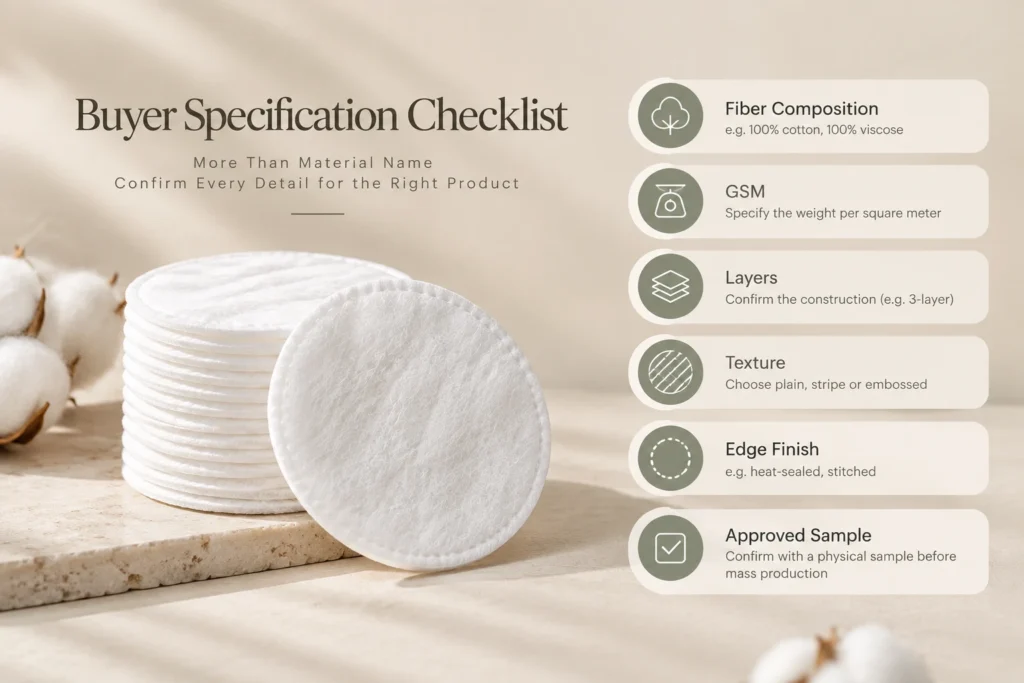
Before approving cosmetic cotton pads for bulk production, buyers should confirm the following six specifications and keep an approved finished sample as a reference.
Fiber Composition
Confirm the fiber composition of the finished pad. If the product is specified as 100% cotton, verify that all fiber layers are made from cotton.
GSM
Confirm the specified GSM and whether it refers to an individual material layer or the combined construction. Agree on the acceptable production tolerance before placing an order.
Layer Construction
Confirm the number of layers and the material used in each layer. For three-layer pads, document the agreed arrangement of the outer surface layers and the inner layer.
Surface Texture
Approve the required surface pattern using a finished sample. Specify the texture of each side if the front and back surfaces have different designs.
Edge Finish
Confirm the edge-finishing method and inspect the finished sample for consistent sealing and layer alignment. Include wet-use integrity in the acceptance requirements if needed.
Approved Reference Sample
Keep an approved finished sample together with the written product specification. Use both references to check production samples and finished goods against the agreed requirements.
Developing Custom Cotton Pads With NUH Textile
We develop private label cotton pads for beauty brands, with 100% cotton as our primary material. Our standard round pad measures 57 mm in diameter and features a three-layer, all-cotton construction with heat-sealed edges.
For custom projects, we offer different pad sizes, surface textures, pack counts and private label bag packaging. Alternative fiber materials are also available upon request. Explore our custom cotton pad solutions for product specifications and OEM packaging options.
Frequently Asked Questions
How Can Buyers Verify That a Cotton Pad Is 100% Cotton?
Request a fiber composition declaration covering the entire finished pad, including every layer. If independent confirmation is required, use an appropriate laboratory fiber-identification test rather than relying on appearance or a burn test alone.
Does a Higher GSM Always Mean a Thicker Cotton Pad?
No. GSM measures material weight per unit area, not finished-pad thickness. Buyers should specify thickness separately when it is an important product requirement.
What Information Is Needed for a Custom Cotton Pad Quotation?
Share your target material, pad size, GSM, layer construction, surface texture, packaging requirements and estimated order quantity. If you have an existing reference sample, include it with your inquiry.
Ready to develop custom 100% cotton pads for your brand? Share your product and packaging requirements with NUH Textile and contact our team to discuss your project.